


As you may be resolving to get fit in 2026, this one is for you…
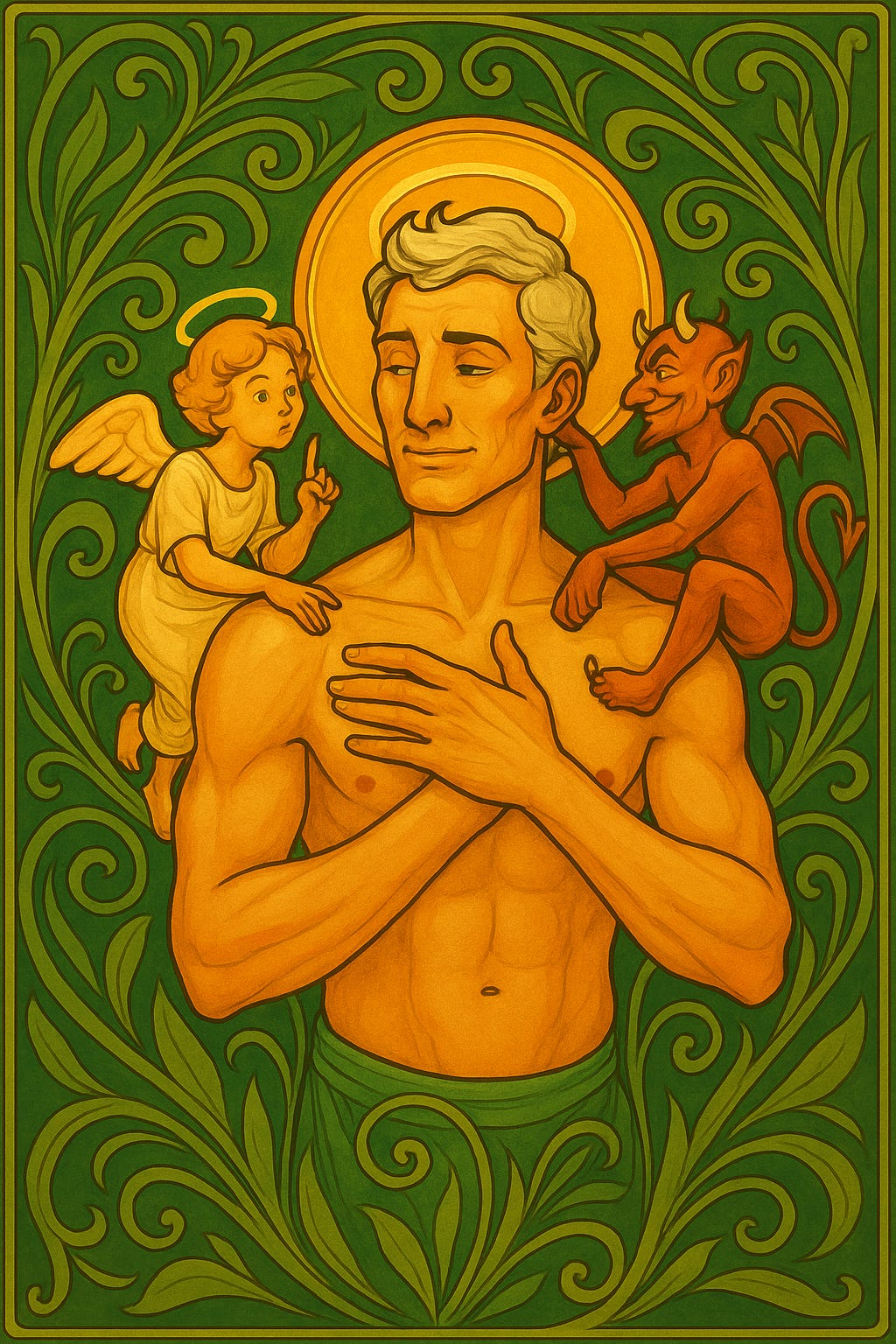
I often talk about how the modern fitness industry willfully confuses fitness with training for war or athletic competition (The Renaissance-illustrated triptich on the subject starts here). It generally has its priorities backwards: aesthetics over function, bullshit metrics over health. While the risks involved in getting from fit to super fit are pretty well documented and I have in the past talked about it, as have the cardiologists. Today I’d like to talk about something else: the risks involved from going from zero (couch potato) to hero (fit).
Mortality risks of being a couch potato are higher, but as you move from doing nothing to doing something you are encountering what is know as “transient” risks. Even with something as easy as accessible to everyone as my own approach, some elements of it are more risky than others.
On low-risk end there is Radio Taiso. The Japanese have been testing these 3-minute dynamic stretches on themselves (young and old, fit and with mobility issues, for almost a hundred years now) so you can be pretty sure that you’re doing something safe. To be sure, they too pile on a DSY warning:
“If an exercise feels too much, stop and take a break. If you have any medical conditions or injuries, please ask your doctor before taking part.”
On the other side of this spectrum, there are sprints. These magical 20 seconds of maximum effort give your body a solid “please upgrade your hardware, this is not enough” signal: your body then responds by upgrading the cardiovascular system and producing more mitochondria.
Two Stories – One Cautionary, One Boring
Let me share 2 stories of mine. One cautionary, one boring. The boring one is boring because I was very sensible, as I wish you will be too, always.
Cautionary: Here is how I overdid sprints. First of all, I wasn’t feeling it (which was mistake number 1: ignoring my body’s request for rest and telling it to shut up and get with the program). The first sprint went all right and in the second sprint, I actually accelerated over the last 5 seconds. When I took off the backpack (10kg), I thought “there is no way I can carry it back down to the scooter”. I tried, but gave up. I was so weak I got a bit scared. Am I going to have a heart attack, or a stroke?
Later that day I saw a YouTube thumbnail which screamed at me in big red letters: Russians Have a Supersonic Nuke - NATO Can’t Stop It. I didn’t even watch it but my heart went up to my throat anyway. This was mistake number 2: forgetting that body and mind are one and that neither should be ingesting toxic stuff.
As a result I ended up feeling weak and awful that day and wondered whether I should go to a hospital. I played in my head a conversation I would have with the doctor:
Doctor: “So what’s the problem? Tell me what happened.”
Me: “I pushed myself sprinting this morning when I didn’t feel like it, and later I saw a thumbnail that said ‘Russians Have a Supersonic Nuke - NATO Can’t Stop It’ and my heart doesn’t feel so good.”
This made me laugh. Then I just rested. The next day at noon, more than 24 hours after the second sprint I started feeling great again.
Boring Tale: there was another sprint session when I forgot that my timer was set to to only 12 seconds. I realised this after the first sprint - it was short and effortless (and I covered a lot less ground). I reset the timer and did the second sprint of 20 seconds and then, despite the devil tempting me to do the third “proper” sprint and telling me that the first one doesn’t count, I listened to my own advice and told him to go to hell.
I don’t know about you, but I like these boring stories, where people are coming home uninjured and energised instead of hurt and drained.
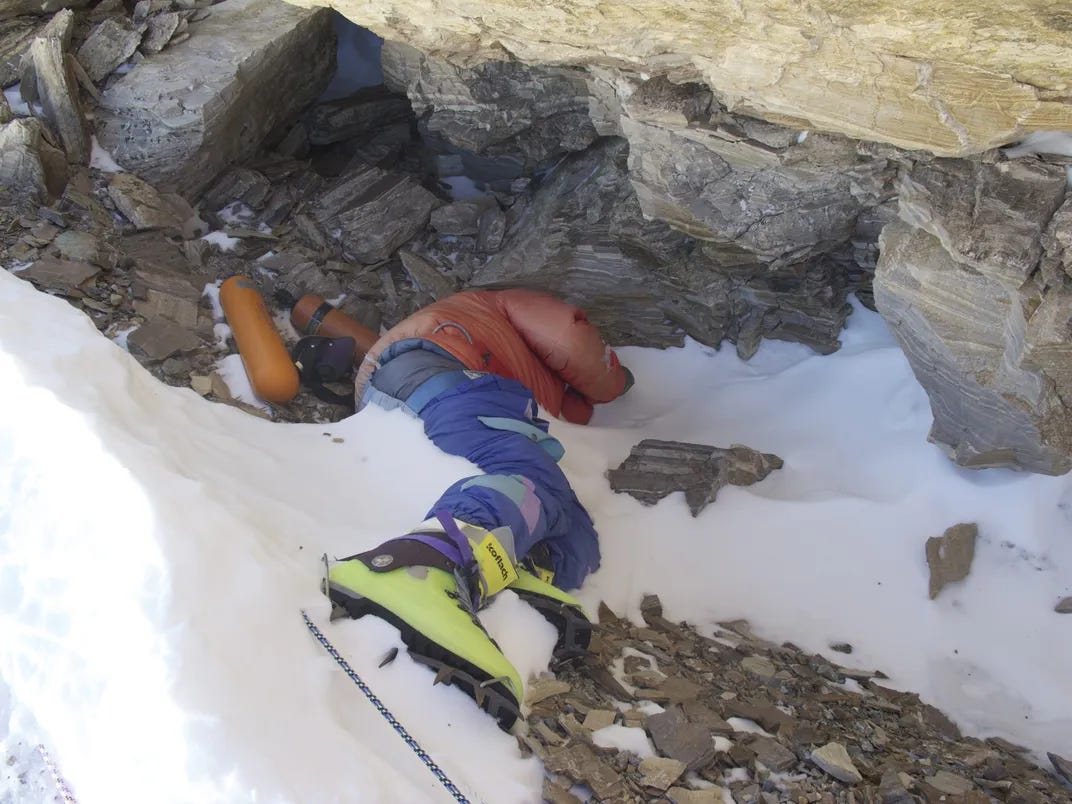
On a our small, personal scale they are the kind of stories where everyone turns back in time from attempting to climb Mount Everest and gets safely back to their loved ones . Not making headlines and not staying in the frozen wasteland until the end of time like the guy in green boots who now serves as the marker of how the peak is.
Conclusion
When you are going from zero (couch) to hero (fit), you have to know that there are risks involved. If you do too much too soon, there is a possibility of getting hurt. Which is why the overriding principle of the Sendyka Method is DSY*. This doesn’t mean I don’t make mistakes like the one I’ve described above but more often it helps me to make those boring and healthy decisions and feel good, not bad about them.
Trying to become fit has risks, but so does continuing sitting on the couch. The blood clot you might have can kill you when you exercise, or it may kill you anyhow later if you don’t. Do your best to minimise risk and move gradually forward. Because in the end we all have to make individual, informed choices in the world of uncertainty. Let me you with the Radio Taiso’s warning:
“If an exercise feels too much, stop and take a break. If you have any medical conditions or injuries, please ask your doctor before taking part.”
*DSY stands for Don’t Strain Yourself (sanitised version).
The best part about writing in a public space is receiving comments with your thoughts and experiences. So please leave a comment.
A note on what I’m doing and why. I’m an anthropologist turned fitness contrarian and I write about how to build strength and flexibility without surrendering your life to the gym. You can support me as a member on Buy Me a Coffee you will get a special perk, access to my course.
Huge thanks to everyone who already supports my work. I’m supremely grateful and I don’t take it for granted. Pawel
The two most fit and “ripped” men I knew died suddenly after rowing workouts in their late forties and early fifties. From their muscles I imagine their workouts were long and intense. My parents lived long and active lives until their 80s when Covid lockdown inactivity and their gym closing eventually led to loss of strength and devastating falls. Your way of consistency and restraint is inspiring, thank you for the (counter)brainwashing!
Doing too much too soon is what gave me knee tendonitis. Improvement has been steady, but annoyingly slow.