


There are two ways to die in fitness.
The first is obvious to everyone (and maddeningly, most everyone doesn’t do anything about it). They just do nothing. They sit, in their cars, in their offices, on their living room couches. As they get older and no longer have to sit so much, it has become an unstoppable force in their life. They take every opportunity to sit down. They think they are resting, but they’re dying in little installments. They stop going out when it rains, then stop going out at all. Then they fall and can’t get up or break something and get taken away to a home. The obituary will say “natural causes” but there is nothing natural about what they were doing to themselves across decades, it was neglect.
The second is less obvious. They think they’re doing everything right. They train for and run marathons. They lift heavy. If exercise is good for you, surely, a whole lot of is a whole lot better. They push their limits because the industry told them that suffering is virtue and meaning and if you aren’t gasping like it might be your last breath, you’re wasting time. On day they develop A-Fib, that dreaded tell-tale sign of endurance training abuse, or drop dead outright. Friends at the funeral will be shaking their heads. “They were so fit,” they’ll say. They were. In fact, they were super fit. And that’s the problem, because that’s what killed them.
I call these the Twin Death Valleys of Fitness.
Because I like being dramatic. Because it has a nice ring to it. Because I hope you’ll remember. And because the data backs it up.
The Copenhagen Problem
The Copenhagen City Heart Study tracked joggers for years. They found something that should have been front-page news then and also now.
Light joggers had the lowest mortality. Moderate joggers had higher mortality. Strenuous joggers had mortality rates statistically identical to people who didn’t exercise at all.
Pause here to read it again. That’s not a mistake. Let that become something you know, not just something you’ve read.
Those guys, powering past you in the park at 6 AM, dripping sweat, looking like warriors storming a citadel? They’re racing towards an early death. At least couch potatoes know what they are (not) doing is bad for them. The endurance warriors are thinking they’re doing themselves longevity favours. They die in equal numbers, whether in their pajamas, or with Strava chronicling their last move.
Recent research in Japan confirmed the benefits of light exercise. And also showed that it is the light activity that promotes the new neuron formation best. That’s because the positive effects of the exercise are not being eaten away by the stress hormones which get released when you are pushing yourself hard.
The fitness industry doesn’t want to talk about it and rightly so. It would mess with their business model. If light and easy works, who needs the gym? Who needs the trainer? Who needs that latest wearable and its app?
The Ancient Wisdom Nobody Reads
The ancient Greeks had it all neatly figured out and Girolamo Mercuriale figured this out again in 1569 in his De Arte Gymnastica Libri Sex*. He revisited ancient Greek writings on exercise and classified them into three types:
Legitimate exercise: for health and longevity. Light, varied, sustainable. The goal is maintenance and durability.
Military exercise: for war. High intensity, high impact, high risk. The goal is battle readiness. Acceptable when the price of not being ready is death.
Athletic exercise: for competition. Extreme, specialized, inherently dangerous. The goal is the accolades and the glory in the Hellenic world.
The Greeks knew that not all movement is medicine. Some of it is poison.
We forgot.
The industry sells us military and athletic exercise and labels it “legitimate.” Marathons. Spartan Races. HYROX. CrossFit. HIIT. All of it falls squarely into the military or athletic categories. None of it is preventative medicine. It is stress testing. We all know that saying, what does not break you, makes you stronger, but nobody talks about the flip side: what does break you… well… breaks you. And what almost breaks you, makes you weaker.
The Middle Path
Between the two death valleys of fitness there is doing enough with restraint. It is not glamorous. It will not get you on a magazine cover. It will not make your ex jealous. It will not garner likes on social media (quit social media by the way, if you haven’t already).
But it will keep you alive and capable.
This is the way of DSY: Don’t Shit Yourself. Move enough to trigger adaptation. Not enough to trigger destruction.
The amount required to get your body in shape is shockingly small, it is even smaller to keep in shape. You should exercise for your health, not aesthetics. Muscles are important., not as a stuffing for your shirt so that you look big, but because they release myokines, chemical messengers that travel through your bloodstream, reducing inflammation, burning fat, repairing tissue, and whispering to pre-cancer cells to kill themselves. You don’t need to exhaust yourself to trigger this.
10 to 15 minutes a day. Most days.
Don’t tell me you don’t have time. You do. That’s less time than you spend brushing your teeth and sitting on the toilet. Maintaining your body is as important as those two bathroom activities.
The Cost of Each Valley
If you sit in the first valley, the cost is obvious. Weakness. Stiffness. Diabetes. Falls. Dependency. The slow erosion of personal freedom until your world shrinks to a room and a chair.
If you sit in the second valley, the cost is hidden behind a mask of “wellness.” You look great. You tell yourself you feel great (though you feel the accumulated exhaustion in the background, but you don’t let yourself admit it). Then one day, the body you’ve been treating like a horse that must be egged on all the time sends an “I want to rest” signal that cannot be ignored.
Jimmy Fixx wrote the book on running. Died of a heart attack at 52. While running.
Edmund Burke had a PhD in exercise physiology. Trained Olympic cyclists. Died on his bike.
Three physicians at Johns Hopkins. All runners. All dead.
If PhDs in exercise physiology can’t save themselves, what chance do the rest of us have?
The answer is: stop trying so hard. Stop running from the first valley straight into the second. Stop thinking that more is better and suffering is virtue.
DSY
You don’t need to choose between decay and destruction.
You need to walk (or slow jog) that middle path. Move, because your body requires it for maintenance. Know when to stop, so that you have plenty left to go through your day. Repeat.
Not sexy. Not marketable. Not something you can post on Instagram with a flexing emoji.
But it works. And it won’t kill you.
That’s the whole pitch.
Below the line
*Chill, libri sex means 6 books, not free love.
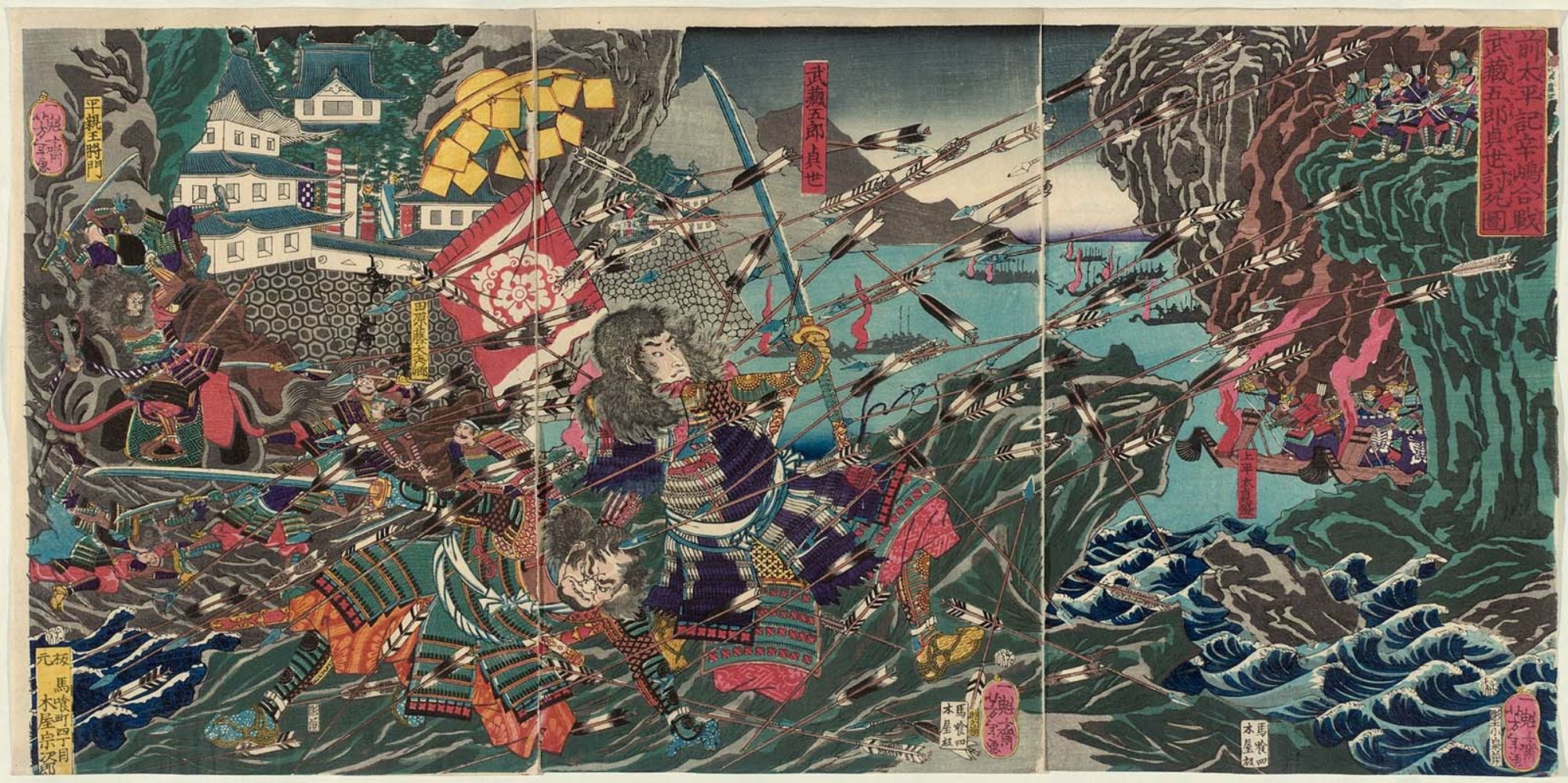
**The Death in Action of Musashi Gorô Sadayo at the Battle of Karashima in the Earlier Taiheiki (Zen Taiheiki Karashima kassen Musashi Gorô Sadayo uchijini no zu). I’m so tired of AI generated images, aren’t you?
I’m an anthropologist who tackled the fitness industry like a research project. Unsurprisingly, turned out it’s mostly nonsense. But buried beneath it all I found enough ancient wisdom and sound science to put together something that works: ten to fifteen minutes a day, most days. Just enough.
You’ll find the free stuff here and on my YouTube channel. The paid work, for people who want clear structure to follow, is on Buy Me a Coffee. The book is in the works.
Great article, gotta keep it going everyday
For a long time, my commute for one half of the year was a casual 20 minute cycling ride both ways, and for the other half a 20 minute train ride.
The difference in how fit I felt was huge. It was a much bigger factor that any deliberate could compensate for when I was doing my train commute.