


Today, I want to suggest a framework you can use for your personal fitness project.
If you’ve had a feeling that fitness is another thing that was ruined by social media, then you are absolutely right. But the problem runs deeper and has been festering for a while. Like many things, social media just made it worse. [1] This post is about giving you a practical tip - one that will help you to be fit, happy, and injury-free.
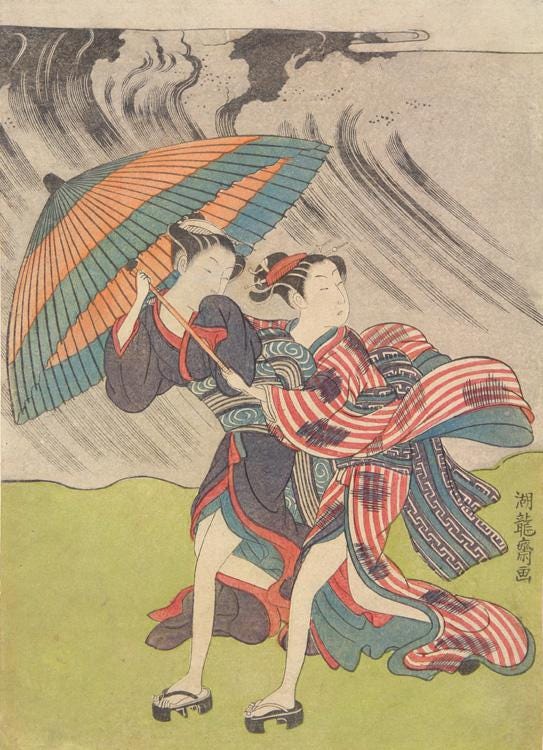
Ancient Greeks classified exercise into three categories: legitimate, military, and athletic. [2] If you agree that most people should be pursuing the first, that most of us should be aiming for health and longevity and not for combat readiness, maximum performance, or glory, then this article is for you.
Fortunately, despite the noise and broken social media feeds, there is enough real knowledge and sound science on exercise for us to be able to figure out our own way. It’s not easy, but it’s possible. Especially that we have the ancient Greeks and Bruce Lee to help us.
Bruce Lee? Yes. We’re going to dust off my favourite quote of his, which goes like this: “Reject what is useless, adopt what is useful and add that which is specifically your own”. [3]
First of all, let’s talk about the “legitimate” criterion. Ask yourself, who’s it for? If it has words like “bootcamp” or “race” in it, it’s not going to be for you. Bootcamps are for fresh recruits. Tabata, Crossfit, Hyrox and whatever new intense fitness workout trend is going to show up next, it’s not for you. You can learn from other people’s experiences of heart attacks or rhabdomyolysis and not your own. You’re not going to get where you want to be faster, you’re going to get hurt and take months to recover. [4]
I just told you what’s not legitimate. But what is? The effect that the exercise will have on you depends on both the dose and the intensity. For example, my sprints (which are, by definition, an intense exercise) are super short because I don’t go beyond the effort that’s good for my heart (based on science and personal experience).
On the other end of the spectrum, you can be doing something of really low intensity, like slow jogging, and you might feel like you could go on forever. But you shouldn’t. You’d be surprised how short I cut my sessions.
Whether it is an intense exercise or a low intensity one, the devil is in the dose. And here is how I applied the Bruce Lee wisdom to both of these extremes. I listen to my body. I reject rigid, handed-down rules.
In the case of sprints this means that their number, duration and frequency are up to me, and not a merciless graphic. I adjust all of them downwards for my age, fitness level and how I feel on any given day.
I do this on the other end of the intensity spectrum too. In case of slow jogging, I reject the rules of cadence, speed and whatever other metric the purists might insist on. I adjust it too, depending on how I feel, how hot (and humid!) it is. This sounds like common sense, and it is. But it is surprising how many people lack common sense and deride me for it in the comments section of my videos.
I do it that way because my objective is not to stick to some rules or graphics. Fitness, for me, is about having a capable body and feeling great in it. Rested and powerful. That is why I am the absolute master of my own fitness program. No authority figure gets to lord over my exertion levels. [5]
The framework:
(1) categorise whether the exercise you want to do is legitimate (Ancient Greeks)
(2) reject what’s useless, adopt what’s useful and add what is your own (Bruce Lee)
(3) decide on the dose by listening to your body (my heuristic).
So here is my own heuristic [6] that helps me achieve that. One that I figured out for myself from years of my own experience, one that I told my mum to follow. One I tell to everyone who’s in doubt about how much exercise they should be doing:
It is your body and you have to listen to it. Carefully. If what you’ve done makes you feel great and energised afterwards, then that was the right dose. If it took a lot out of you and you’re feeling wiped out and a bit tired and sluggish for the rest of your day, then you have gone too far. You need to scale it down.
That’s it, that’s the rule. The devil is in its application [5, again].
Below the line (thoughts, context and explanations):
* I really wanted to use the word “heuristic” here, which is more like a “rule of thumb”, but I had a feeling that the algorithm might punish me for it.
[1] Check out The Male Body Lie post.
[2] If this is your first time hearing about it, then you can check my article on the topic here.
[3] You might nitpick about my choice of fitness heroes. After all, Bruce Lee died super young. Sometimes people have a bad reaction to pills and die. It doesn’t invalidate the wise things he said. Same as professor Tanaka dying relatively young does not invalidate his slow jogging research.
[4] I won’t be scaring you with the statistics of people over 50 dying in gyms here, but you can check out Lucy Rice’s harrowing account of rhabdomyolysis following intensive “bootcamp” training (The Guardian, June 2026).
[5] Ego can try lording over you, you have to keep it in check. But that’s a topic of its own.
[6] I was really hoping you would have read the asterix to the title.
I’m an anthropologist who tackled the fitness industry like a research project. Unsurprisingly, turned out it’s mostly nonsense. But buried beneath it all I found enough ancient wisdom and sound science to put together something that works: ten to fifteen minutes a day, most days. Just enough.
You’ll find the free stuff here and on my YouTube channel. The paid work, for people who want clear structure to follow, is on Buy Me a Coffee. The book is in the works.
Rhabdomyolysis.... never heard of this before.
But remember signing up to a 3mth notice posh gym membership early 2000's.
Embarrassingly went twice.
The last time was to a spinning class after not cycling for a long time.
Oh dear. My legs only just got me to the car and driving with trembling legs was very worrying.
Thank God it didn't develop into Rhabdomyolysis.